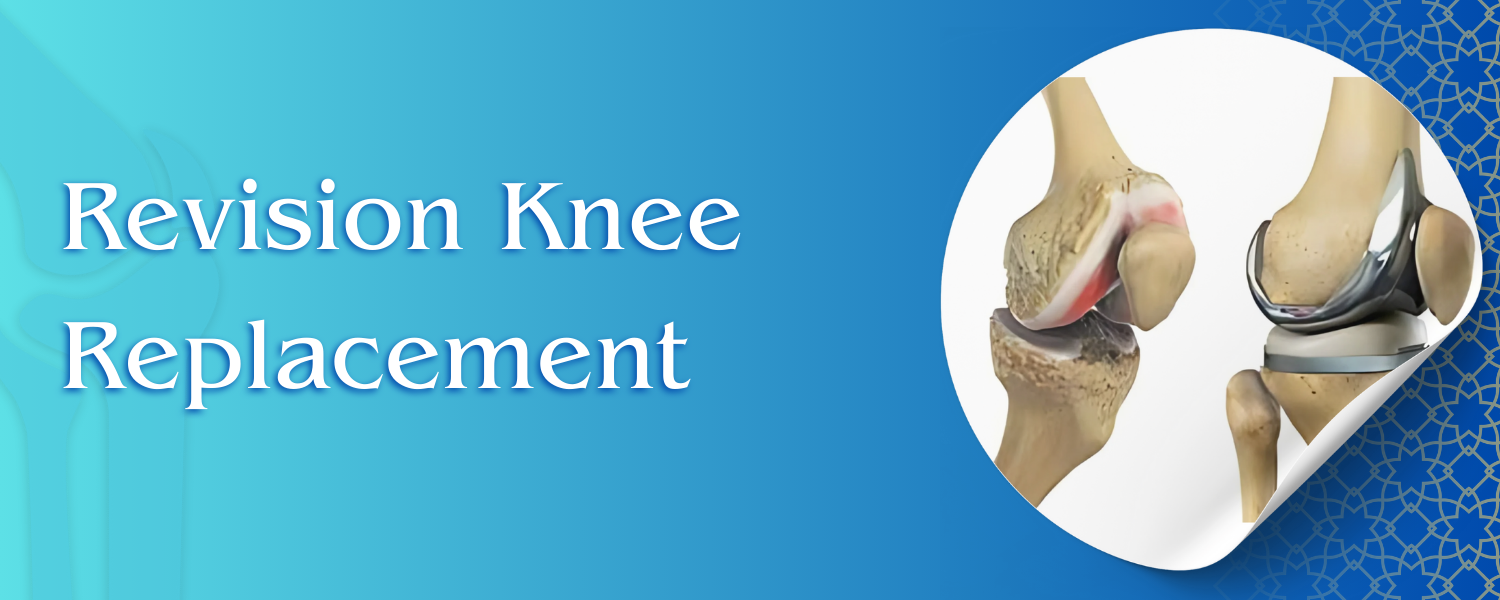
A revision knee replacement is a surgical procedure performed when a previously implanted knee prosthesis fails due to wear, loosening, infection, instability, or other complications. Unlike primary knee replacement, revision surgery is more complex because it involves removing the old implant, repairing bone loss, and placing a new prosthesis.
.png)
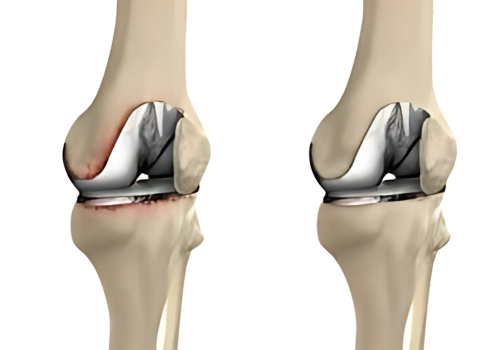
A revision is needed when the existing knee implant fails due to:
Over time, the artificial joint can wear out or become loose, causing pain and instability.
Bacterial infection around the implant can lead to swelling, pain, and implant failure.
The knee may become unstable due to ligament damage, causing frequent buckling or dislocations.
Trauma or falls can cause fractures around the knee prosthesis, requiring revision surgery.
Scar tissue formation can lead to loss of flexibility, requiring surgical intervention.
The type of revision surgery depends on the cause of failure:
Only one component (femoral, tibial, or patellar) is replaced.
Suitable for minor implant wear or component failure.
The entire implant is removed and replaced with a new prosthesis.
Required in cases of severe implant loosening, infection, or bone loss.
Stage 1: The old implant is removed, and an antibiotic spacer is placed to treat infection.
Stage 2: After infection clearance (typically 6–8 weeks), a new permanent implant is inserted.
.png)
.png)
Over time, artificial knee components can degrade, leading to pain and instability.
The prosthetic may become loose from the bone, causing discomfort and reduced function.
A deep infection around the artificial joint requires removal and replacement of the implant.
Bone fractures near the implant can make revision necessary.
Ligament damage or improper alignment can cause knee instability.
